Just over five decades ago, much of Singapore beyond the urban centre was undeveloped, consisting of mudflats and swamps. Most of the population lived in crowded settlements with no reliable water supply. Through significant effort and planning, Singapore has transformed considerably. Its urban experience now draws the attention of city planners from countries and regions such as China, Southeast Asia, South America, and Africa, who are interested in learning about urban governance and planning for the cities of tomorrow.
Why Hold Urban Solutions Events in Singapore?
Award-Winning Example of Urban Planning
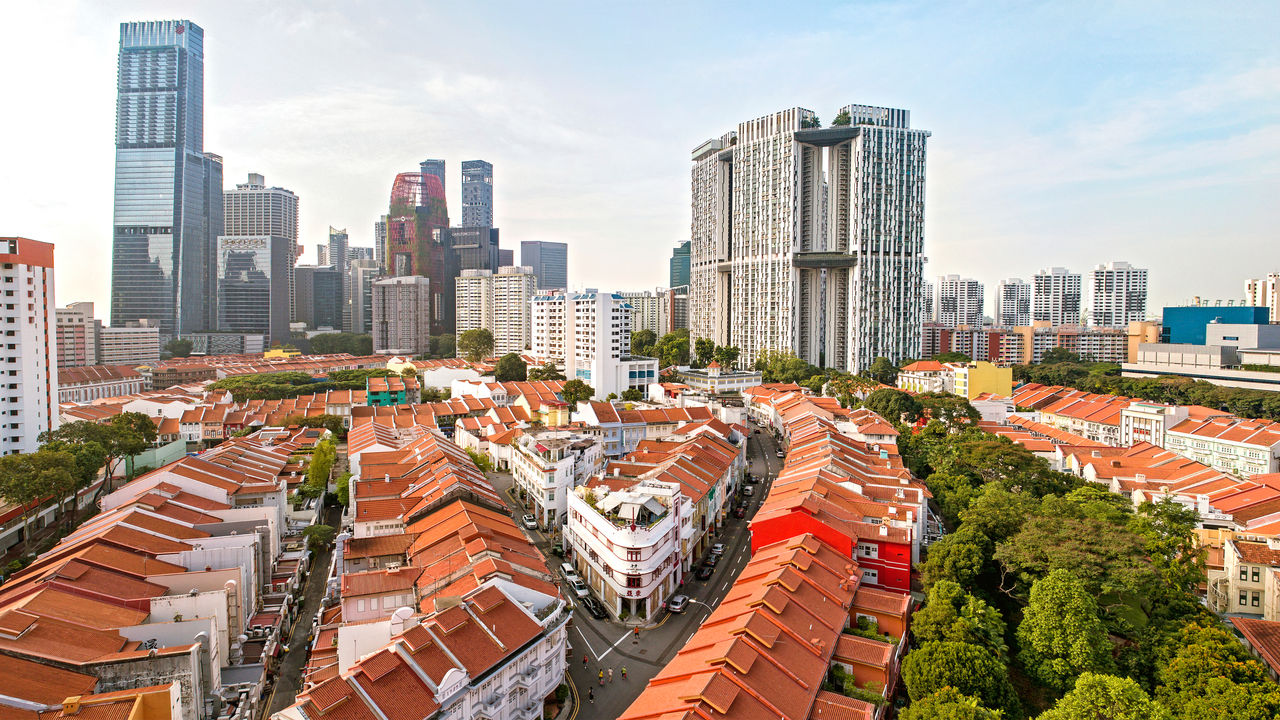
Committed to a sustainable future, as outlined in its Green Plan 2030, Singapore is actively integrating environmental considerations into its urban development. Evolving beyond merely functional structures to address rapid population and economic growth, Singapore's newer buildings now factor environmental impact into their overall design. Some, such as the National University of Singapore’s SDE4 building, feature net zero carbon emissions. Luxury hotel Pan Pacific Orchard, for example, has an array of energy-saving features: photovoltaic panels for clean energy, rainwater harvesting for irrigation, and a bio-digester that converts food waste into cleaning water. Due to limited land resources, Singapore relies heavily on external food sources. To enhance self-sufficiency, the nation is developing innovative urban solutions such as farming on rooftops and under viaducts, climate-controlled indoor farming and multi-tier aquaculture farming.
Luxury hotel Pan Pacific Orchard, for example, has an array of energy-saving features: photovoltaic panels for clean energy, rainwater harvesting for irrigation, and a bio-digester that converts food waste into cleaning water.Due to limited land resources, Singapore relies heavily on external food sources. To enhance self-sufficiency, the nation is developing innovative urban solutions such as farming on rooftops and under viaducts, climate-controlled indoor farming and multi-tier aquaculture farming.
Singapore's fast and efficient public transport system, developed in response to a growing population, is set to improve even further with the Land Transport Master Plan 2040. By 2040, commuters in Singapore can expect to reach their nearest neighbourhood centre within 20 minutes, and the city within 45 minutes. The plan also includes barrier-free journeys to make public transportation accessible for all, as well as more urban mobility solutions such as electric vehicles, autonomous vehicles and cycling networks. These changes align with global trends of consumers favouring greener options. Delegates and trade visitors can experience this first-hand by using our world-class public transportation system to get to their events.
In addition, the government set aside $150 million for the Cities of Tomorrow R&D programme (CoT) in 2017, with an additional $66 million allocated in 2022. This programme, which was launched in 2018, charts critical research areas required to build a future city, such as advanced construction (additive manufacturing, 3D printing for buildings), resilient infrastructure and sustainability (how buildings and spaces affect humans).
A Model of Sustainability
With scarce natural resources, Singapore has had to deploy innovative solutions in energy and water management.
Cleaner Energy
Even as Singapore continues to develop into one of the world’s most advanced cities, it is keenly aware of the need to reduce its carbon footprint. Currently, 95 per cent of Singapore’s electricity is generated using natural gas; – the cleanest form of fossil fuel. At the same time, the country is also heavily involved in the research and development of alternative and more sustainable electricity generation methods such as solar power, carbon capture utilisation and storage (CCUS) and hydrogen fuel cells.
In particular, Singapore is ramping up its efforts in hydrogen. It plans to build two more hydrogen-ready natural gas power plants by 2030, bringing the total to at least nine such plants in the nation. These plants, each capable of powering about 864,000 four-room flats for a year, will help meet Singapore’s growing energy needs while ensuring energy security.
Singapore’s commitment to clean energy is further exemplified by the pilot project to transform Sentosa Island into a carbon-neutral resort by 2030. The project will employ various solutions including smart infrastructure that can detect and analyse energy usage patterns.
Water Management
With no natural aquifers or lakes and limited land to collect and store rainwater, Singapore has made water conservation and resilience its top priorities. Today, Singapore is internationally recognised as a model city for integrated water management and an emerging Global Hydrohub – a leading centre for business opportunities and expertise in water technologies.
To meet its water supply needs, Singapore relies on a mix of sources including local catchments occupying two-thirds of its land surface, imported water, water desalination and water reclamation.
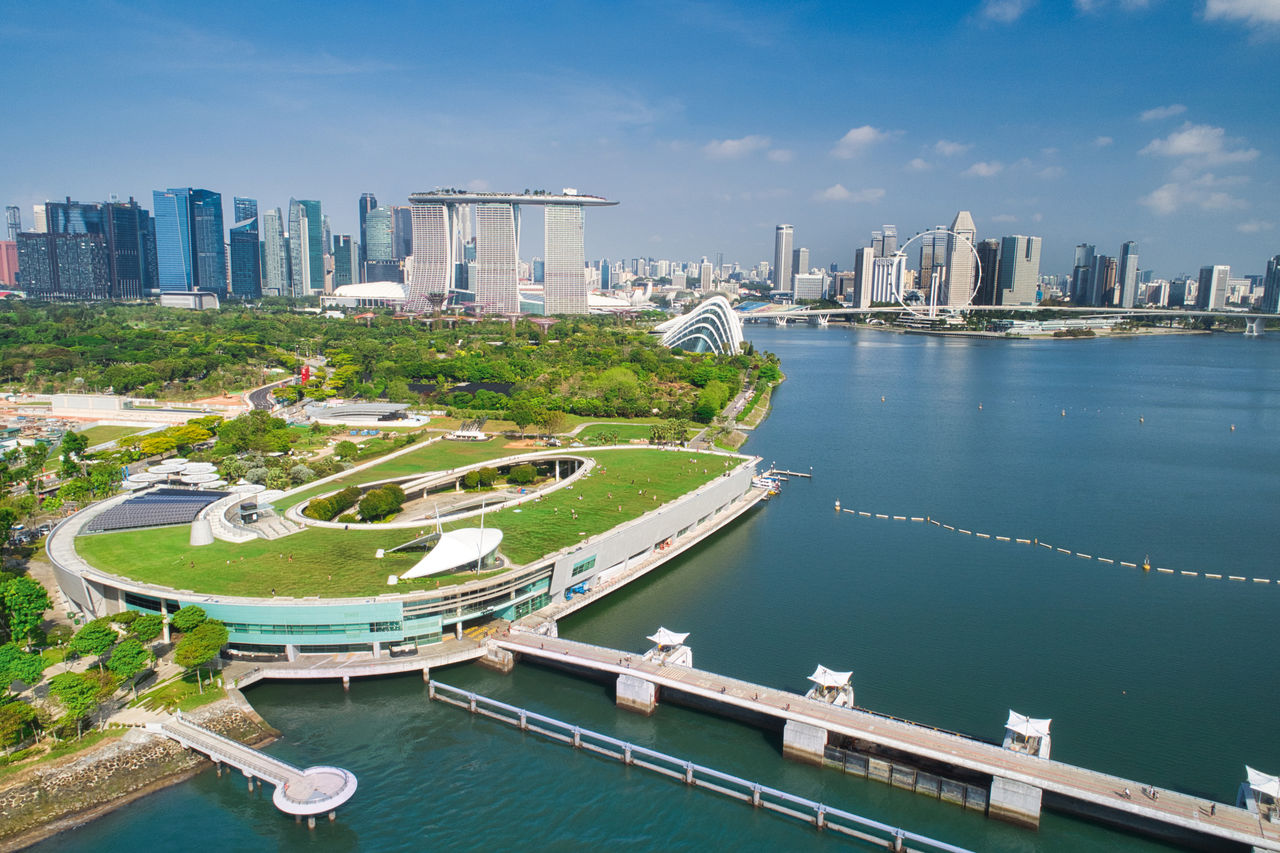
Keppel Marina East Desalination Plan
In February 2021, Singapore opened its fourth desalination plant. It is the country’s first large-scale dual-mode desalination plant that can treat both seawater as well as freshwater, depending on the prevailing weather conditions. Both sources of water are directly linked to the plant’s dual flow chamber through a 1.8 kilometre-long pipeline.
NEWater
is Singapore’s success story of reclaiming water using advanced membrane technologies and ultra-violet disinfection. NEWater plants currently supply 40 per cent of the nation’s water needs. This is expected to increase to 55 per cent in the future.
With its dedication to sustainability, showcased through innovative clean energy and water management initiatives, Singapore provides an inspiring backdrop for urban solutions events. The city-state is set to become a leading sustainable MICE hub in Asia Pacific, empowering changemakers and leaders to create a positive, lasting impact and build a greener future.
Homeland Security
As Singapore quickly develops into one of the most connected cities in the world, it recognises the need for updated security protocols that address the new digital and open-border landscape.
Within its borders, Singapore is expanding its use of cameras and technology to better support law enforcers and first responders. These include the use of sensors, video analytics, artificial intelligence (AI), automation and drones to ease manpower shortages and improve community safety.
Cognisant of growing counter-terrorism threats, Singapore has adopted a multi-agency approach involving collaboration between domestic and international law enforcement and security agencies. Through the implementation of the SGSecure app, Singapore has also empowered ordinary citizens to contribute to the fight against terrorism by reporting suspicious activities to the authorities.
In today’s digital age, criminal activities have evolved, with intellectual property (IP) theft replacing physical robberies as a growing threat. To address this, Singapore has developed programmes and apps such as SG IP Fast Track and IPOS Go, which allow enterprises to easily obtain protection for patents, trademarks and registered designs.
Pandemic control has also emerged as a critical aspect of homeland security. Through recent experiences with SARS and COVID-19, Singapore has demonstrated its ability to respond swiftly — deploying technologies such as tracing systems and temperature monitoring, as well as leveraging IP to produce essential supplies such as testing kits and disinfecting coating materials locally.
The rapid emergence and evolution of new threats call for a much more proactive rather than reactive stance. Singapore is well-positioned to contribute to the global conversation on homeland security, by hosting dialogues and events that foster collaboration and knowledge exchange on critical industry issues.